


Degree Requirements and Sequence
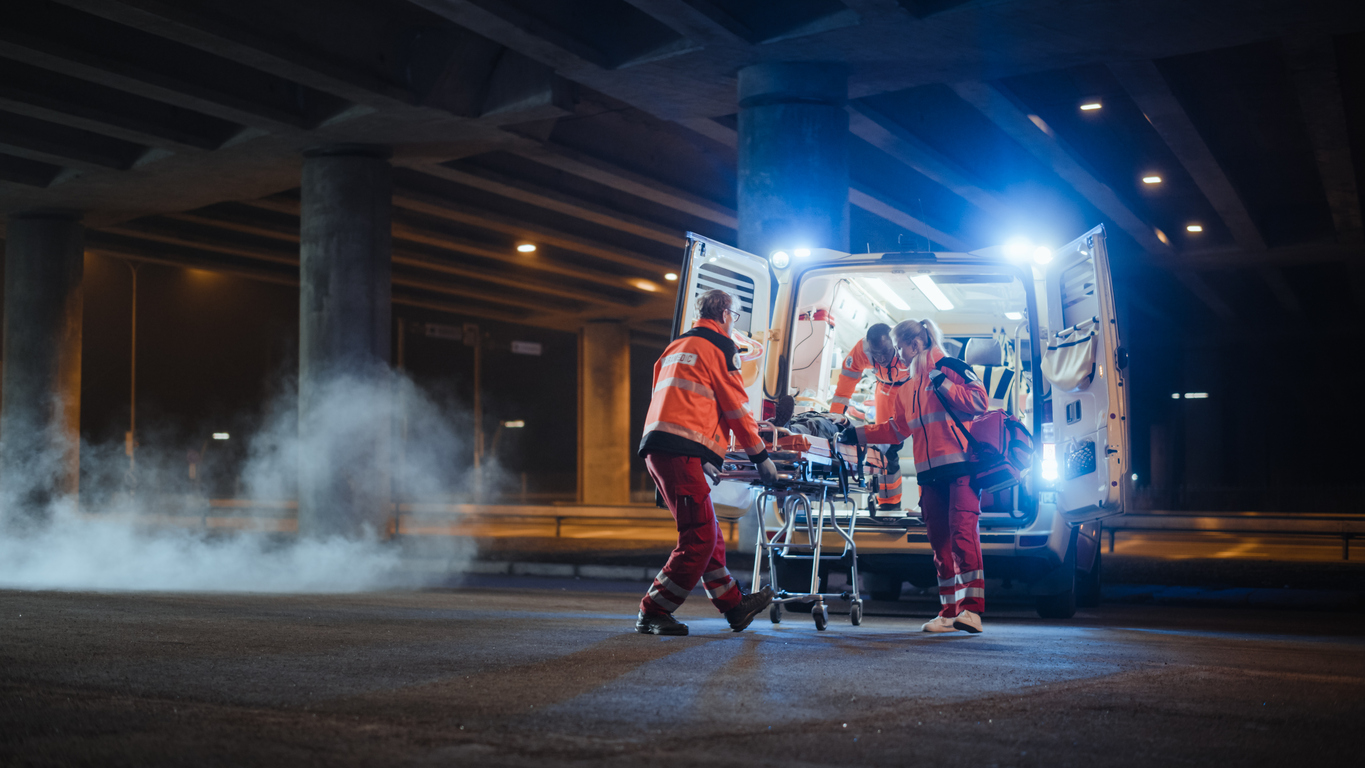
Paramedics are allied health professionals who function as part of a comprehensive EMS response, performing interventions with the basic and advanced equipment typically found on an ambulance. The Associate of Applied Science in Paramedic Program is designed to provide students with the necessary life-saving knowledge and skills required for entry-level employment as a paramedic. Students will build upon an emergency medical technician background to develop proficiency in critical and emergent patient care as encountered in the pre-hospital setting. Upon successful completion of the program, students will be eligible to sit for the National Registry of Emergency Medical Technicians® Paramedic Certification Exam.
The AAS in Paramedic Program also provides students with coursework and competencies in critical thinking, communication, and social and cultural awareness, making it possible for students to transfer to related bachelor's degree programs.
Additional Program Information
MCCC's Paramedic Program consists of didactic, laboratory and clinical courses. The clinical courses will take place in hospital and ambulance settings with MCCC clinical partners.
The Paramedic Program is approved through the State of Michigan Department of Health and Human Services.
The Monroe County Community College Paramedic program has been issued a Letter of Review by the Committee on Accreditation of Educational Programs for the Emergency Medical Services Professions (CoAEMSP). This letter is NOT a CAAHEP accreditation status, it is a status signifying that a program seeking initial accreditation has demonstrated sufficient compliance with the accreditation standards through the Letter of Review Self-Study Report (LSSR) and other documentation. Letter of Review is recognized by the National Registry of Emergency Medical Technicians (NREMT) for eligibility to take the National Registry's Paramedic credentialing examination(s). However, it is NOT a guarantee of eventual accreditation.
To contact CoAEMSP:
214-703-8445
Transfer Information
For information regarding transfer opportunities for this or any program, please visit the Transfer section of the MCCC website.
Admission Criteria
The Paramedic Program is a selective admissions program. Paramedic students must meet the following minimum established criteria to be considered for acceptance.
- Acceptance into Monroe County Community College.
- A current, unrestricted Michigan Emergency Medical Technician license or higher or completion of an MDHHS approved EMT program and eligibility to sit for the NREMT EMT certification exam and licensure in the state of Michigan (certification and licensure must be completed prior to the end of the paramedic program).
- Completion of HLTSC 170 or BIOL 257 or equivalent.
For additional questions about admission criteria and how to apply, please contact the Health Sciences Division Office at 734-384-4102 or the MCCC Admissions office at 734-384-4104.
General Information
- The program admits students once per year in the Fall and can accommodate up to 20 students maximum.
- Immunizations and health examinations are required at the student's expense to ensure that the student can meet the technical standards of the program and the requirements of partner clinical agencies.
- Students admitted to health science programs must consent to background/security checks including a criminal background check and drug screening. The student is responsible for any cost associated with the background/security/drug screening checks. Certain criminal convictions may render a student ineligible to train at clinical sites which are necessary in order to successfully complete the program. The college will review the results and determine, on a case-by-case basis, whether to deny admission to any individual based on the results of the background check, criminal background check and drug screening. Despite the passage of the Michigan Regulation and Taxation of Marijuana Act in November 2018, the possession of marijuana remains prohibited under United States Federal Law and MCCC policy (6.21). The College and Health Sciences Division prohibits employees, students and members of the public from possessing or using marijuana (legal or medicinal) on college property or during any college activity. Health occupation students must consent to random drug screening with negative results for marijuana or any illicit substance. Failure to provide a negative drug screen will prevent participation in the program and/or result in program dismissal.
- Paramedic program students are required to have professional liability and personal health insurance. The professional liability insurance is provided by Monroe County Community College. Personal health insurance must be obtained by the student and maintained throughout the program in order to comply with clinical agency requirements. Proof of insurance will be required prior to participating in the first clinical activity.
- For the duration of the program, students must maintain an active American Heart Association cardiopulmonary resuscitation certificate for professional rescuer of infant, child and adult. More information will be provided to students at the beginning of the program.
- The paramedic profession involves the provision of emergent care for individuals and families and is characterized by the application of verified knowledge and the skillful performance of life-saving paramedic functions. Therefore, in order to be considered for admission or to continue in the program, all applicants must be able to meet the health sciences technical standards available in the Paramedic Program section of the MCCC website. A prospective student or participant in the program with a disability for which accommodations may be appropriate can request reasonable accommodations to meet technical standards. The college will provide appropriate accommodations but is not required to fundamentally alter the requirements or nature of the program or lower its academic standards. Requests for accommodations should be directed to a disability services counselor in the Student Success Center. To make an appointment, please call 734-384-4167.
- The student must receive a "B" or better grade in all paramedic courses and a "B" or better grade in all non-paramedic courses required in the program plan of study. Failure to meet this requirement may result in the inability to progress to the next semester of the program. Paramedic and required non-paramedic courses must be completed in the order outlined in the program's plan of study.
- Paramedic courses utilize Internet services and resources to supplement instruction. Students must have a desktop or laptop computer with reliable Internet access.
- The Paramedic Program is designed to meet the education requirements for paramedics in the state of Michigan. Upon completion, students are eligible to sit for the NREMT Paramedic Certification Exam. MCCC has not determined if the Paramedic Program meets the state education requirements for licensure in states other than Michigan. Students who wish to work in any other state or U.S. territory are encouraged to reach out to that state's regulatory body for additional information on such requirements.
- In addition to the general college rules, Paramedic Program students are required to adhere to the policies and procedures outlined in the Paramedic Student Handbook.
Required General Education Courses
See the General Education Requirements in college academic catalog for a list of courses that satisfy the General Education Learning Competencies.
- C1 Natural Sciences Competency Credit Hours: 4
- C2 Mathematics Competency Credit Hours: 4
- C3 ENGL 151 - English Composition I Credit Hours: 3
- C4 Computer Literacy Competency Credit Hours: 3
- C5 Human Experience Competency Credit Hours: 3
- C6 Social Systems Competency Credit Hours: 3
Required Courses and Sequence
Fall Semester (1st)
- EMS 151 - Emergency Medical Technician I Credit Hours: 6
- Natural Sciences Competency Credit Hours: 4 (C1 GE Requirement)
- ENGL 151 - English Composition I Credit Hours: 3 (C3 GE Requirement)
Winter Semester (2nd)
- EMS 153 - Emergency Medical Technician II Credit Hours: 6
- HLTSC 170 - The Human Body in Health and Disease Credit Hours: 3
- Social Systems Competency Credit Hours: 3 (C6 GE Requirement)
- Mathematics Competency Credit Hours: 4 (C2 GE Requirement)
Fall Semester (3rd)
- EMS 200 - Paramedic I Credit Hours: 4
- EMS 201 - Paramedic I Lab Credit Hours: 5
- HLTSC 240 - Cardiac Electrophysiology Credit Hours: 3 *
- Computer Literacy Competency Credit Hours: 3 (C4 GE Requirement)1
Winter Semester (4th)
- EMS 210 - Paramedic II Credit Hours: 5
- EMS 211 - Paramedic II Lab and Clinical Credit Hours: 6.5
- Human Experience Competency Credit Hours: 3 (C5 GE Requirement)
Summer Semester (5th)
- EMS 230 - Paramedic III Credit Hours: 2
- EMS 231 - Paramedic III Lab Credit Hours: 2
- EMS 240 - Paramedic Capstone Experience Credit Hours: 4.5
Total Degree Requirements: 67 credits
Total Degree Costs: 111.5 billable contact hours
*Required non-paramedic; must be taken in order presented above or prior to the semester indicated and passed with a “B” or higher
1Can be satisfied through a competency test